 dtfinnedtube.com


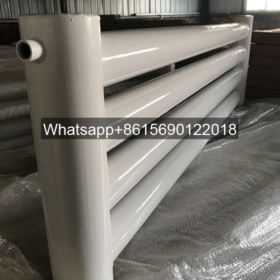
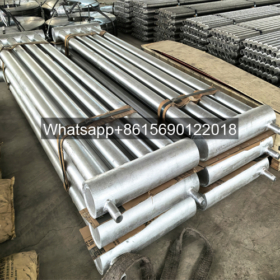
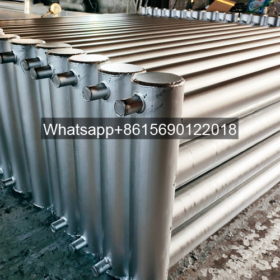
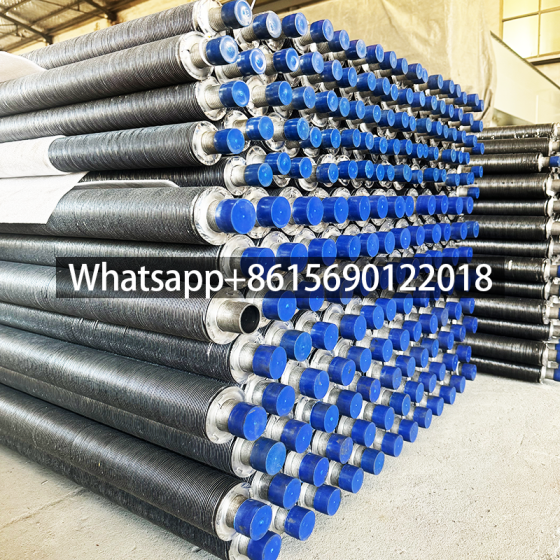
Steam-powered straight-pipe radiators are specifically designed for high-temperature and high-pressure applications. They utilize an all-steel straight-pipe structure, withstand temperatures from 100-300℃, have low maintenance costs, and a lifespan of up to 25 اعوام. Suitable for various industrial and agricultural applications, they offer quick installation, stable heat exchange, and are 40% cheaper than high-frequency welded finned tubes, making them an ideal choice for high efficiency and energy saving.
I. Equipment Structure and Core Technology
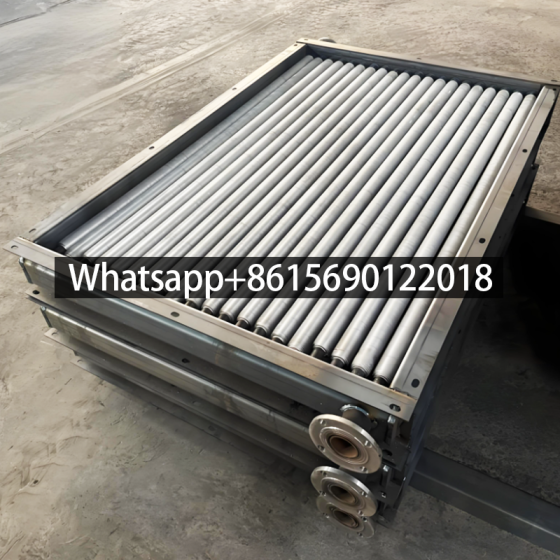
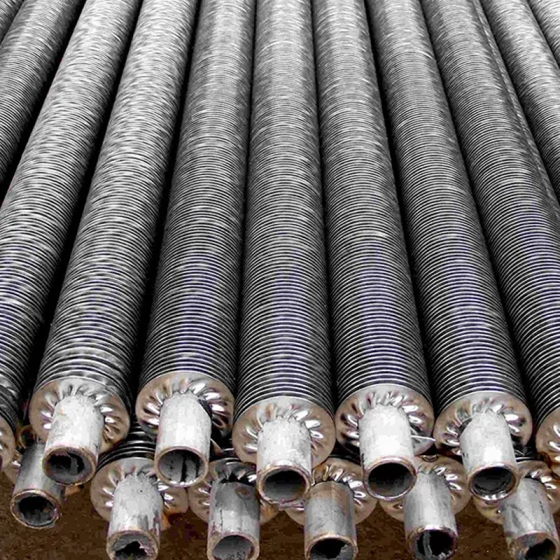
Steam-powered straight-pipe radiators are simplified heat exchange devices specifically designed for high-temperature steam. Unlike the “base tube + fins” composite structure of high-frequency welded finned tubes, they employ an all-steel straight-pipe structure. The core consists of seamless steel pipes, connecting fittings, and supporting components. No additional fins are required; heat exchange is achieved solely through the contact between the steel pipe itself and the air. The structure is simple and maintenance is convenient.
From a material selection perspective, the base tube is the core load-bearing component of the equipment and must withstand both the high temperature and high pressure of the steam. For civilian and low-pressure industrial applications, 20# seamless steel pipes with a wall thickness of 2.5-4mm are commonly used. These pipes can withstand steam pressures of 1.6-2.5MPa and are suitable for saturated steam at 100-150℃.
For high-pressure industrial applications, 304 or 316L stainless steel pipes with a wall thickness of 3-5mm are preferred. These pipes have a pressure resistance of 4.0-6.0MPa and can handle superheated steam at 200-300℃, while also resisting corrosive steam.
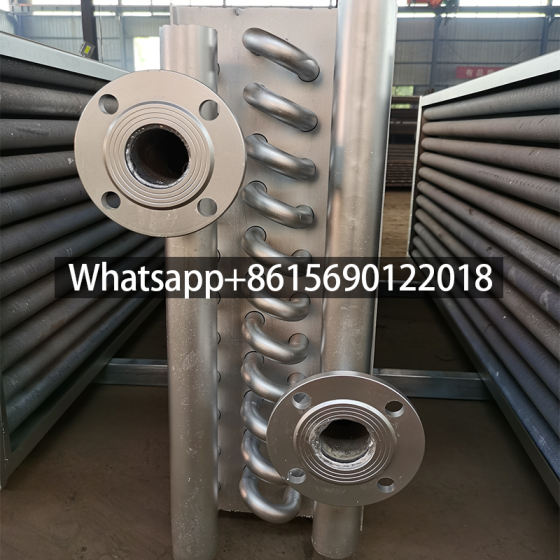
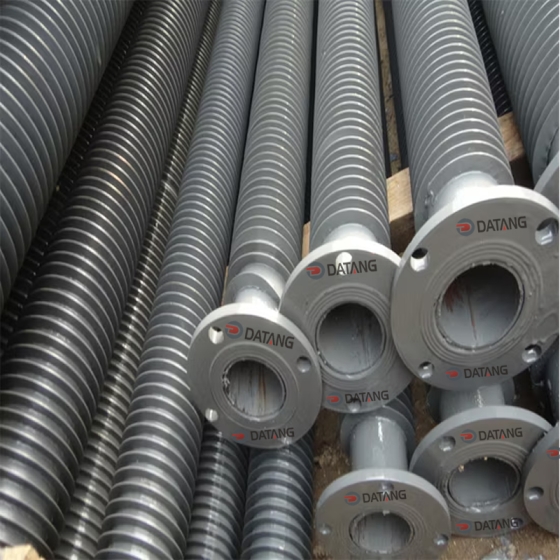
Connecting fittings are made of the same material as the base pipe and use either welding or flange connections. Welded connections offer strong sealing and are suitable for long-term fixed operation. Flange connections facilitate disassembly and maintenance and are often used in industrial systems requiring periodic inspections. Flange specifications typically follow standards such as PN1.6 and PN2.5. Asbestos gaskets or spiral wound gaskets are used on the sealing surfaces to ensure no leakage of high-temperature steam.
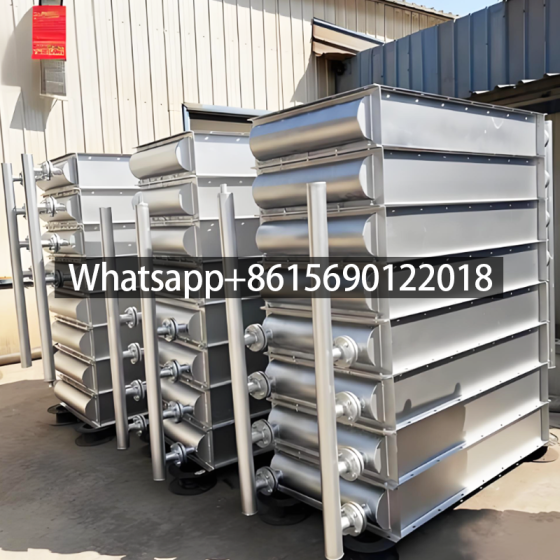
The support components mainly include brackets and fixing clamps, made of Q235 carbon steel or stainless steel, with different structures designed according to the radiator installation method (wall-mounted, floor-standing).
Floor-standing brackets must have sufficient load-bearing capacity, with a single unit capable of supporting the weight of a radiator of 50-100kg; wall-mounted brackets are fixed with expansion bolts to ensure equipment stability during steam pressure fluctuations and prevent loosening of interfaces due to vibration.
II. Performance Advantages and Differentiated Features
High Temperature and High Pressure Adaptability: Compared to high-frequency welded finned tubes which need to accommodate multiple heat media, steam-powered radiators are specifically optimized for steam. The steel base tube has a temperature resistance range of 100-300℃, stably adapting to both saturated and superheated steam.
Under 1.0MPa saturated steam conditions, the surface temperature of the 20# seamless steel pipe base tube can reach over 180℃, far exceeding the heat exchange temperature of high-frequency welded finned tubes under hot water conditions, and there is no risk of fin detachment, making it suitable for industrial workshops and other scenarios with high temperature requirements.
Low maintenance cost and high durability: The finless structure is one of its core advantages, avoiding the heat exchange efficiency reduction problems caused by dust accumulation and corrosion on the fins of high-frequency welded finned tubes. Routine maintenance only requires periodic wiping of dust from the steel pipe surface; there is no need to disassemble and clean the fin gaps, reducing maintenance frequency by more than 50% compared to high-frequency welded finned tubes.
The all-steel structure has strong impact resistance. In harsh environments such as industrial workshop vibrations and equipment collisions, the failure rate is only 0.3%/year, far lower than the 1.2%/year of high-frequency welded finned tubes. The service life can reach 15-20 اعوام, and some stainless steel products even exceed 25 اعوام.
Outstanding heat exchange stability: Although the lack of fins results in a smaller heat dissipation area compared to high-frequency welded finned tubes (the heat dissipation area of a Φ57mm steel tube of the same specification is only 1/8-1/12 of that of a high-frequency welded finned tube), the heat exchange of the steam-powered bare-tube radiator relies on the temperature difference between high-temperature steam and air. Under stable steam temperature conditions, the heat exchange efficiency fluctuates within ±3%, far lower than the ±10% fluctuation caused by changes in fin cleanliness in high-frequency welded finned tubes.
Especially in industrial waste heat recovery scenarios, it can stably recover waste heat from steam condensate, maintaining a heat recovery efficiency of 75%-80%.
Significant cost advantage: From a manufacturing perspective, the absence of fin processing and high-frequency welding processes reduces production costs by 30%-40% compared to high-frequency welded finned tube radiators of the same specification, and shortens the production cycle by 50%, making it suitable for rapid mass production.
From an installation perspective, the simple structure allows for installation of a single unit in just 1-2 hours, saving 60% of labor time and reducing installation costs by over 25% compared to high-frequency welded finned tube radiators. This makes it highly attractive for projects with limited budgets or tight schedules.
III. Multi-Scenario Application Examples
Residential Heating Scenarios: In the renovation of centralized heating systems in older residential communities in northern China, steam-powered bare-tube radiators are a common choice.
Taking a community built in 2000 as an example, Φ48×3mm 20# seamless steel pipe radiators are used, compatible with the municipal heating network’s 0.8MPa saturated steam. A single unit (2m long, 6 tubes) can generate 1200W of heat, meeting the heating needs of 25-30㎡ apartments. Its finless structure facilitates cleaning and has strong low-temperature resistance, eliminating the risk of freezing and cracking in winter environments down to -20℃. After the renovation, resident satisfaction reached 92%, and maintenance costs were reduced by 40% compared to the original cast iron radiators.
Industrial Workshop Heating: In machinery manufacturing workshops, steam-powered tube radiators can withstand high-temperature and vibration environments.
In the welding workshop of an automotive parts factory, Φ57×4mm 304 stainless steel radiators were selected, compatible with the factory boiler’s 1.2MPa saturated steam. Installed next to the workshop columns using floor-mounted brackets, each unit covers a 50-60㎡ work area, stably controlling the workshop temperature at 15-18℃, meeting the environmental temperature requirements of the welding process. In the five years of operation, only annual surface cleaning is required, with no recorded malfunctions, and maintenance costs are far lower than other heat exchange equipment in the workshop.
Food Processing and Drying: In the drying workshop of a food factory, the high-temperature resistance and easy-to-clean characteristics of steam-powered tube radiators are particularly important.
In the drying section of a flour processing plant, Φ42×3mm 20# seamless steel pipe radiators are used, compatible with 1.0MPa saturated steam. A hot air circulation system controls the drying temperature at 60-70℃, achieving rapid dehydration of the flour. Its smooth steel pipe surface is less prone to powder accumulation, meeting food hygiene standards. Its high-temperature resistance can withstand steam temperature fluctuations, ensuring stable drying efficiency and increasing product qualification rate by 3%.
Agricultural Greenhouse Heating: In northern winter greenhouse cultivation, steam-powered light-tube radiators provide stable heat.
A vegetable greenhouse base uses Φ38×2.5mm 20# seamless steel pipe radiators, compatible with small boilers supplying 0.6MPa saturated steam. Wall-mounted on both sides of the greenhouse, they maintain the internal temperature at 15-20℃, ensuring the normal growth of crops such as cucumbers and tomatoes. The finless structure avoids insect trapping in the fin gaps and exhibits strong moisture resistance, showing no rust even in the high humidity environment of the greenhouse. Its service life has reached 8 اعوام, and it continues to operate stably.
IV. Selection Guidelines and Precautions
Select the appropriate model based on steam parameters: Prioritize determining steam pressure and temperature. For pressure ≤ 2.5MPa and temperature ≤ 150℃, select 20# seamless steel pipe. For pressure > 2.5MPa, temperature > 150℃, or steam containing corrosive impurities, select 304/316L stainless steel pipe to prevent corrosion and leakage of the base pipe.
Calculate the heat dissipation area based on heat exchange requirements. The formula is “required heat dissipation ÷ heat dissipation per unit length”. For example, under 1.0MPa steam conditions, the heat dissipation per unit length of Φ57×3mm steel pipe is approximately 60W/m. If a heat dissipation of 1200W is required, a radiator with a total length of 20m is needed.
Consider the installation environment and method: For civil or clean environments (such as food processing plants), wall-mounted installation is preferred to save floor space. For open spaces such as industrial workshops and greenhouses, floor-standing installation can be used for easy equipment maintenance.
The installation location should avoid areas with high personnel activity and points of risk of equipment collision. Ensure a 10-15cm gap between the radiator and walls/floors to guarantee airflow and prevent a decrease in heat exchange efficiency.
Supporting Equipment and Maintenance: A steam pressure reducing valve, steam trap, and filter are required. The pressure reducing valve lowers the pipeline steam pressure to the equipment’s operating range (e.g., from 1.6MPa to 0.8MPa); the steam trap promptly removes condensate to prevent water hammer damage; the filter removes impurities from the steam to prevent pipe blockage.
Daily maintenance includes monthly checks of interface sealing, quarterly cleaning of surface dust, and an annual pressure test to ensure safe operation.