 dtfinnedtube.com

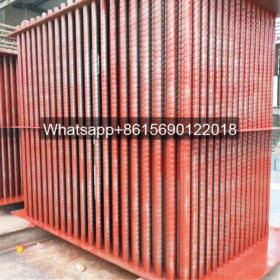
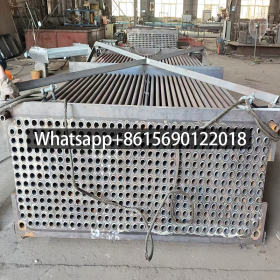
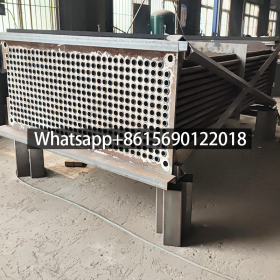
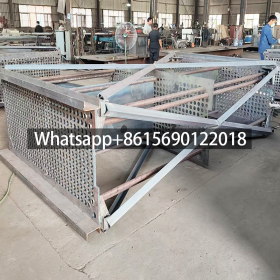
Boiler Efficiency: High-Performance Air Preheaters by Datang Finned Tube
In thermal power plants, maximizing energy recovery and reducing fuel consumption are critical to maintaining competitive operational costs and meeting stringent environmental standards. At the heart of this thermal optimization is the เครื่องอุ่นอากาศ (APH).
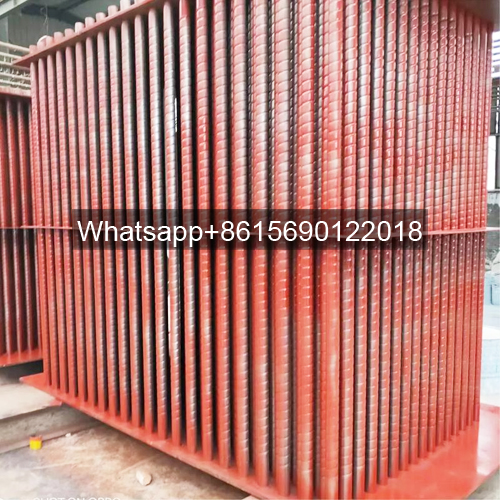
In thermal power plants, the air preheater is an indispensable and critical auxiliary component located in the tail-end flue of the boiler system.As a vital heat recovery system, the air preheater captures waste heat from the boiler’s exhaust flue gas and uses it to preheat the combustion air. For power plants looking to enhance thermal efficiency while mitigating devastating equipment degradation, Datang Finned Tube delivers engineered, heavy-duty finned tube bundles designed to withstand the harshest power plant environments.
The Core Role of Air Preheaters
- Boosting Boiler Efficiency: By recovering heat from the flue gas at the tail end, it effectively lowers the exhaust temperature and minimizes heat loss.
- Enhancing Combustion: Preheated air (primary and secondary air) entering the furnace significantly improves the ignition conditions of the fuel, increases combustion stability, and reduces losses from incomplete combustion.
- Drying and Conveying Pulverized Coal: The preheated primary air enters the coal mill to dry the raw coal and transport the pulverized coal to the burners.
Main Types and Working Principles
The most common air preheaters in thermal power plants (especially for large utility boilers) mainly fall into two categories: Regenerative (Rotary) and Tubular.
1. Regenerative Air Preheater (Rotary Type)
This is currently the mainstream choice for large-capacity power generating units.
- Working Principle: It acts like a giant, slowly rotating honeycomb. Inside, there are densely packed corrugated plate heat storage elements. Driven by a motor, the rotor spins at a low speed (usually only 1.5 to 4 rpm). The heat storage elements alternately pass through the flue gas side and the air side. When passing through the high-temperature flue gas zone, the elements absorb heat; when rotating to the air zone, they release the heat to the cold air, thus completing the heat exchange.
- Three-Section Design: Large units typically use a “three-section” design, dividing the outer shell circumference into three zones: the flue gas zone, primary air zone, and secondary air zone. This ensures that different types of air and flue gas do not interfere with each other while achieving efficient heat exchange.
- Pros & Cons: Compact structure, small footprint, and extremely high heat transfer efficiency (can exceed 70%); however, the structure is complex, requiring extremely high sealing standards, which makes air leakage a common issue.
2. Tubular Air Preheater (Recuperative Type)
More commonly seen in small to medium-sized industrial boilers or older power plant boilers.
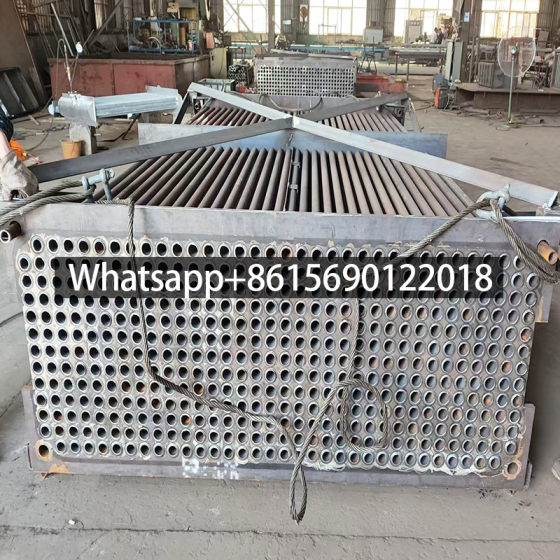
- Working Principle: Composed of many parallel steel tubes. Flue gas flows inside the tubes while air sweeps across the outside of the tubes (or vice versa), and heat is transferred directly from the flue gas to the air through the metal tube walls.
- Pros & Cons: Simple structure, low manufacturing cost, and good sealing (low air leakage); however, it is bulky, has relatively lower heat transfer efficiency, and is difficult to arrange in large-capacity boilers.
Common Operational Challenges
In actual operation, air preheaters face several typical “pain points”:
- Low-Temperature Corrosion and Ash Clogging: When the temperature of the flue gas at the tail end of the boiler is low, sulfides in the gas can easily condense on the cold end (low-temperature section) of the air preheater, forming acid liquid. This corrodes the metal and binds with fly ash, leading to channel blockage and increased system resistance.
- Air Leakage Issues: Especially in rotary air preheaters, due to the clearance between stationary and rotating parts, cold air can easily leak into the flue gas side. This reduces boiler efficiency and increases the power consumption of fans.
- Abrasion (Wear): High-speed flue gas carrying fly ash particles continuously scours the heat exchange elements, causing the tube walls or corrugated plates to thin out or even break.
The Role of Advanced Finned Tubes in Modern Air Preheaters
Traditional bare-tube or regenerative rotary air preheaters often face severe challenges, including high spatial footprints, rapid soot accumulation, and devastating low-temperature dew point corrosion.
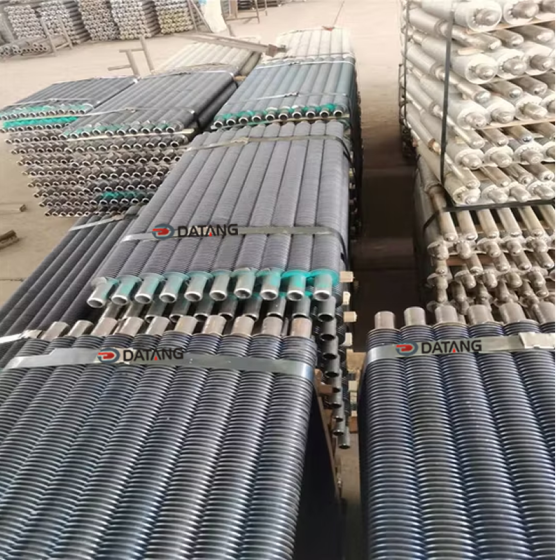
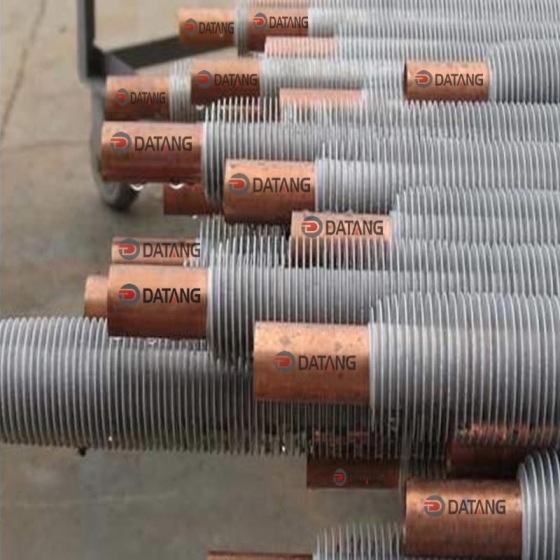
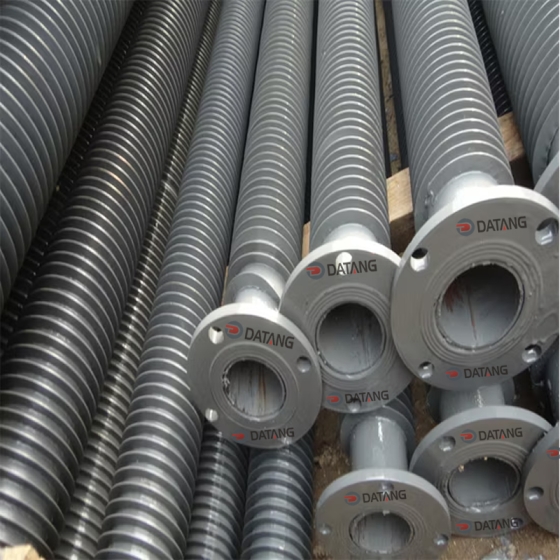
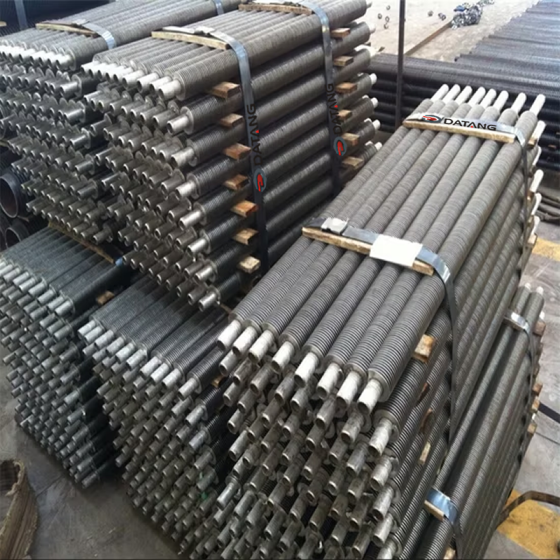
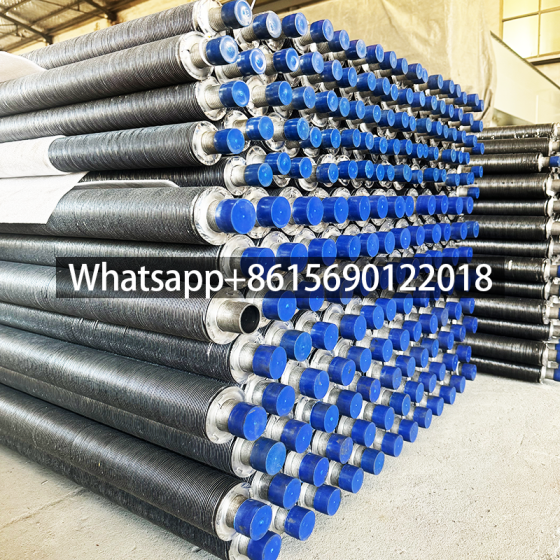
To overcome these roadblocks, Datang Finned Tube specializes in the design and manufacture of high-efficiency extended surface tubes specifically optimized for stationary, tubular air preheaters. By replacing standard tubes with advanced finned configurations, power plant operators experience:
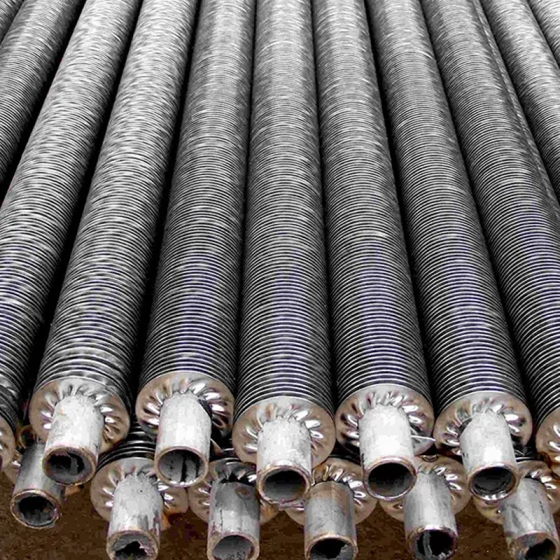
- Exceptional Thermal Transfer: Finned tubes exponentially increase the external heat transfer area, allowing for compact APH designs that achieve higher temperature lifts in the combustion air.
- Reduced Soot Accumulation: Optimized fin spacing ensures smooth aerodynamic flow, drastically reducing ash deposition and minimizing pressure drops across the gas side.
- Unmatched Mechanical Integrity: Engineered to handle high gas velocities and thermal cycling without fin deformation or thermal resistance decay.
Datang Finned Tube’s Core Offerings for Thermal Power Plants
Every boiler system operates under unique fuel profiles, exhaust temperatures, and sulfur contents. Datang Finned Tube provides tailored material and structural combinations to guarantee a prolonged service life:
1. High-Frequency Welded (HFW) Solid & Serrated Finned Tubes
Ideal for the high-temperature zones of the air preheater, our HFW finned tubes feature a continuous, molecular bond between the fin and the base tube. This ensures 100% thermal conductivity and structural rigidity under intense thermal stress.
2. Corrosion-Resistant Material Selection
Low-temperature sections of an air preheater are highly susceptible to sulfuric acid dew point corrosion (cold-end corrosion). Datang Finned Tube utilizes specialized alloys and corrosion-resistant steels—such as ND steel (09CrCuSb), Corten, and premium stainless steel grades—to ensure your equipment outlasts conventional alternatives.
3. Laser-Welded Finned Tubes
For cutting-edge, ultra-supercritical power units requiring maximum compact efficiency, our laser-welded finned tubes offer a precision-engineered weld seam with a minimal heat-affected zone, providing maximum heat transfer with zero contact resistance.
Why Leading Global Energy Sectors Trust Datang Finned Tube
Based in China’s premier industrial manufacturing hub, Datang Finned Tube (Cangzhou Datang Steel Pipe Co., Ltd.) has been delivering heavy-duty heat exchange components to global engineering projects since 2007.
- Rigorous Quality Assurance: From raw material chemical analysis to strict hydrostatic pressure testing and non-destructive testing (NDT), we ensure every tube bundle leaves our facility defect-free.
- Results-Oriented Design: We don’t just sell tubes; we deliver lower maintenance costs, reduced coal consumption, and extended boiler run-times.
- Global Supply Chain Reliability: Trusted by engineering firms and power plant operators across Europe, Central Asia, and the Middle East for executing large-scale, high-specification projects.
Optimize Your Thermal Performance Today
Don’t let valuable thermal energy escape up the stack, and stop losing money to frequent cold-end maintenance shutdowns. Upgrade your thermal power plant’s air preheater with the durability and efficiency of Datang Finned Tube.
- Visit Our Official Core Domain: www.dtfinnedtube.com
- Get a Technical Consultation: Connect with our project engineering team today to review your boiler parameters, material specifications, and drawings for a custom quotation.
- อีเมล์:[email protected]WhatsApp/WeChat: +8615690122018