 dtfinnedtube.com

Waste heat recovery finned tubes increase the external surface available for transferring heat from industrial exhaust gas to a useful process stream. Correctly selected finned tubes can help recover energy from boiler flue gas, process heaters, kilns and drying equipment. Their performance, however, depends on more than fin area: gas composition, fouling tendency, pressure drop, operating temperature and tube metallurgy must all be considered.
This guide explains how finned tubes work, compares common designs and outlines the technical data needed to specify tubes for an industrial waste heat recovery project.
What Are Waste Heat Recovery Finned Tubes?
Industrial waste heat recovery fin tubes are heat-transfer components with metal fins attached to, embedded in or formed from a base tube. The fins increase external area where the gas-side heat-transfer coefficient is relatively low. Heat passes from the hot gas through the fin and tube wall to the fluid on the other side, or in the reverse direction depending on service.
The fins do not automatically make every heat exchanger more efficient. Fin effectiveness depends on material conductivity, fin geometry, thermal contact, operating conditions and cleanliness. A poorly chosen fin spacing can increase fouling and fan power, offsetting the benefit of additional area.
How Do Finned Tubes Recover Industrial Waste Heat?
1. Increase Available Gas-Side Heat Transfer Area
Because gases normally transfer heat less readily than liquids, adding external fins can increase the area exposed to the gas without requiring a proportionate increase in tube length. The final increase in usable heat duty must be established through thermal design calculations; area alone does not determine system performance.
2. Support Heat Transfer in Compact Tube Bundles
Finned-tube arrangements may provide the required heat duty within a smaller equipment envelope than an equivalent plain-tube arrangement. The practical benefit depends on fin efficiency, allowable gas-side pressure drop and maintenance access.
3. Enable Heat Recovery in Economizers and Air Heaters
In a boiler economizer, recovered exhaust heat can preheat feedwater. In an air heater, it can preheat combustion or process air. Counter-current flow can be useful for maintaining a driving temperature difference where permitted by the equipment configuration, but it is not inherent to every finned-tube system.
Main Types of Finned Tubes Used in Waste Heat Recovery
Different manufacturing methods produce different fin-to-tube interfaces, geometries and service limits. The following comparison is a selection guide rather than a universal ranking.
| Fin type | Main construction | Typical selection considerations |
| High-frequency welded (HFW) | Helical metal strip resistance-welded to the base tube | Robust mechanical attachment; common for industrial economizers and exhaust heat recovery; verify weld quality and allowable temperatures. |
| Laser-welded | Helical fin joined to the base tube with laser welding | Precise weld geometry and low heat input; evaluate materials, weld examination and project-specific cost. |
| H-type / double H-type | Plate-like fins welded to tube in H-shaped arrangement | May suit selected ash-bearing gas streams; optimize spacing, tube arrangement and soot-cleaning access. |
| Extruded / bimetallic | An outer sleeve is mechanically formed into fins around a base tube | Useful in suitable temperature ranges; check material compatibility, thermal expansion and interface contact. |
| L / LL / KL wrapped | Metal strip wrapped and mechanically secured in varying configurations | Often considered for air heating and moderate-temperature service; attachment and allowable temperature vary by design. |
| G-type embedded | Fin strip embedded in a machined groove | Mechanical retention for compatible operating conditions; evaluate groove integrity and thermal cycling. |
High-Frequency Welded Finned Tubes
In high-frequency resistance welding, a fin strip is helically wound around the tube and joined at the contact line by electrical heating and pressure. This produces a welded joint intended to provide secure attachment and a conductive heat-transfer path. HFW finned tubes are often considered for boiler economizers, industrial exhaust heat recovery and other duties requiring durable metallic fins.
Selection should consider weld continuity, fin dimensions, tube materials, thermal cycling, corrosion and the required inspections. Avoid relying on a generic bond-rate percentage unless the figure is linked to a specific test method and production record.
Laser-Welded Finned Tubes
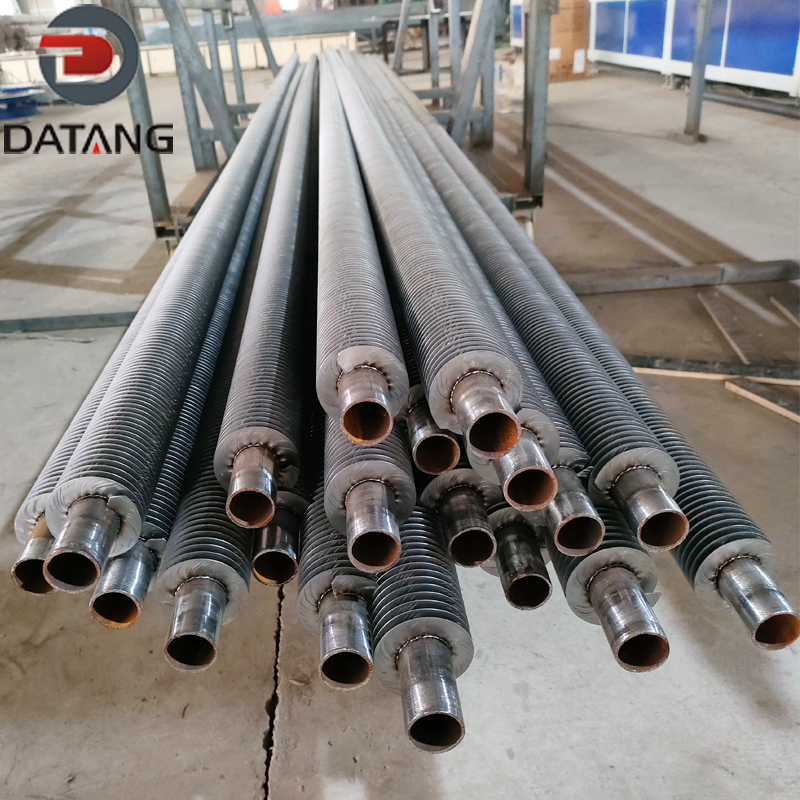
Laser welding joins the fin to the tube using a concentrated heat source. It can offer controlled weld geometry and a relatively small heat-affected zone, although the result depends on material, joint design and process parameters. The process should be evaluated against the project’s heat-transfer, fabrication and inspection requirements rather than described as universally superior to other welding methods.
H-Type and Double H-Type Finned Tubes
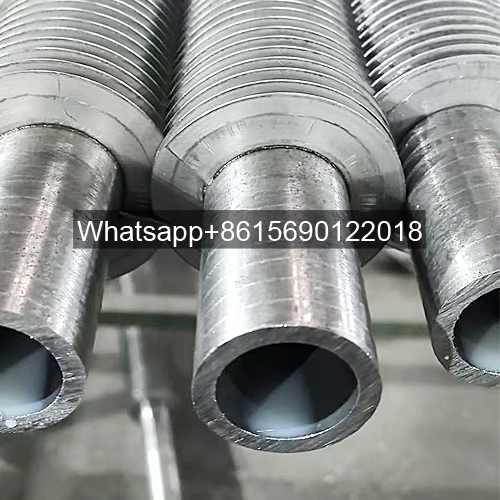
H-type finned tubes use paired plate-like fins arranged around the base tube. They are frequently considered for flue gas economizers and recovery systems where ash deposition must be addressed. Compared with closely spaced spiral fins, an appropriately designed H-type arrangement may provide more accessible flow passages and facilitate cleaning. Suitability still depends on particle behavior, gas velocity and cleaning arrangements.

Extruded, Wrapped and Embedded Finned Tubes
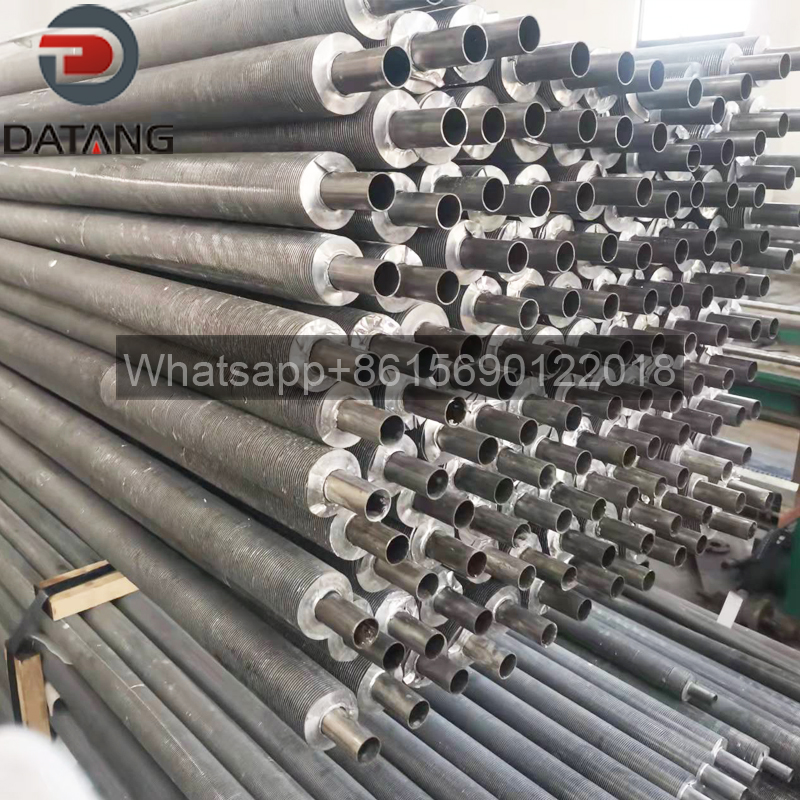
Extruded bimetallic fins are commonly formed from an outer sleeve surrounding the base tube; this is not the same as a one-piece integral fin cut or rolled from the base tube itself. Wrapped L, LL and KL fins depend on their mechanical attachment details, while G-type fins are retained in machined grooves. For all mechanically attached designs, consider contact resistance, thermal cycling, fin retention and temperature limits for the exact material combination.
Finned Tubes vs Plain Tubes: Which Should You Choose?
| Design question | Finned tubes | Plain tubes |
| Gas-side heat-transfer area | Higher external area in a given tube length | Lower external area |
| Dust and fouling | Fin passages can trap deposits if poorly specified | Generally simpler to access and clean |
| Gas-side pressure drop | Potentially higher depending on geometry | Often lower for comparable arrangements |
| Best fit | Clean to moderately fouling gas where area benefit justifies tradeoffs | Severely fouling, sticky or difficult-to-clean applications may favor plain tubes |
There is no universal best choice. Thermal duty, lifecycle cleaning cost, fan capacity, corrosion and installation constraints should be assessed together.
Industrial Applications of Waste Heat Recovery Finned Tubes
- Boiler flue gas economizers: recovering exhaust heat to preheat feedwater.
- Combustion air preheaters: transferring recovered energy to incoming air.
- Industrial kilns and furnaces: using suitable exhaust heat for water, air or process-fluid heating.
- Drying lines: recovering exhaust heat for process air or auxiliary heating duties.
- Chemical and metallurgical facilities: recovering heat from appropriate gas streams subject to corrosion and fouling assessment.
Key Engineering Factors When Selecting Finned Tubes
Flue Gas Composition and Acid Dew Point
Gas containing sulfur compounds, moisture or other corrosive species may form acidic condensate if metal surface temperatures fall below the relevant dew point. A material grade alone does not eliminate this risk. Evaluate composition, minimum metal temperature, condensate management and startup/shutdown conditions.
Fin Pitch, Height and Fouling
Tighter fin spacing can increase external area but also raises the risk of bridging and blockage in dusty or sticky streams. Wider spacing, accessible bundle geometry and a suitable cleaning method can be more important than maximum nominal surface area.
Pressure Drop and Fan Power
Pressure drop must be checked against the available fan or blower margin. Geometry, gas flow rate, tube layout and fouling allowance influence the final resistance. A design with higher theoretical heat duty is not automatically the lowest-cost option when additional fan power and maintenance are considered.
Operating Temperature, Pressure and Materials
Specify operating and design temperatures and pressures on both sides of the tube, along with material grades, wall thickness and corrosion allowances. Maximum service conditions depend on the complete design and applicable code; there is no single safe temperature or pressure rating for all finned-tube constructions.
Cleaning and Long-Term Maintenance
Provide adequate cleaning access, select compatible soot-blowing or washing methods where appropriate, and establish inspection intervals. Cleaning methods must be matched to the fin geometry, materials and process equipment.
Quality Control and Documentation for Finned Tube Procurement
A credible finned tube supplier should agree on inspection and acceptance requirements before production. Depending on the product and project specification, the quality package may include:
- Material certificates and heat-number traceability for the base tube and fin material.
- Dimensional inspection records covering tube OD, wall thickness, length, fin height, thickness and pitch.
- Weld or fin-attachment quality inspections applicable to the selected manufacturing process.
- Visual inspection and protection/packaging records.
- Hydrostatic, leak or nondestructive testing where required by the applicable specification and product scope.
Tests and standards must be selected for the actual pressure boundary and product design. A fin-attachment inspection is not equivalent to a pressure-boundary test, and not every finned tube requires every test listed above.
Why Work With Cangzhou Datang Steel Pipe?
滄州大唐鋼管有限公司, 株式 会社. manufactures finned tubes for industrial heat-transfer applications and offers options including high-frequency welded, laser-welded and mechanically formed fin constructions. Customers can submit drawings and operating conditions for technical review, manufacturing feasibility assessment and quotation.
Selecting the correct manufacturing process is more important than choosing a fin type from a catalog alone. Datang can discuss base-tube and fin materials, tube dimensions, fin geometry, inspection documentation and packaging requirements as part of the inquiry process. Product availability, capabilities and requested testing should be confirmed in the final technical offer.
What Information Should You Send for a Finned Tube Quotation?
- Application and equipment type (economizer, air heater, exhaust heat exchanger, etc.).
- Operating/design temperature and pressure of both streams.
- Gas composition, expected dust loading, flow rates and any corrosion concerns.
- Base tube material, outside diameter, wall thickness and finished length.
- Fin type, fin material, fin height, thickness, pitch and finned length.
- Required quantity, standards, testing and document requirements.
- Technical drawings and delivery destination, if available.
If not all dimensions are final, send the known process conditions and a preliminary drawing. The supplier can then identify what information is still needed for a proper technical assessment.
Frequently Asked Questions
Are finned tubes always better than plain tubes for waste heat recovery?
No. Finned tubes are often advantageous when gas-side heat transfer is the limiting factor, but plain tubes may be easier to clean and more suitable for heavily fouling service. Compare complete life-cycle performance rather than external area alone.
Which finned tube type is suitable for dusty flue gas?
There is no universal answer. H-type fins or wider-pitch designs may be considered, but gas composition, particle stickiness, flow velocity and cleaning equipment ultimately determine suitability.
How does fin pitch affect waste heat recovery performance?
Closer fins generally add area but can also increase pressure drop and fouling risk. The correct fin pitch balances heat recovery, fan power, maintenance access and operating conditions.
Can bimetallic extruded fins be used at high temperatures?
Only within the proven limits of the specific material combination and mechanical interface. Differential thermal expansion and thermal cycling can affect performance; verify suitability before selection.
What inspections should accompany an order?
Request material traceability, dimensional and attachment-quality records, and any project-specific tests required by the contract or governing code. Confirm acceptance criteria with the supplier before production.
Request Custom Finned Tubes for Your Waste Heat Recovery Project
Planning a boiler economizer, industrial air heater or exhaust heat recovery system? Share your process requirements and finned-tube drawings with Cangzhou Datang Steel Pipe Co., 株式 会社. to request a technical review and quotation.
Website: httpsの://dtfinnedtube.com/ | Email: [email protected] | ワッツアップ: +86 156 9012 2018